
Защо споделените проксита прекъсват автоматизацията и кога не са правилният избор

Why Shared Proxies Break Automation and When They Are Not the Right Choice
Shared proxies are often chosen as a starting point: they are cheaper than dedicated proxies, quick to connect and suitable for simple tasks. For example, checking a website, testing software, collecting open pages or quickly understanding whether a certain setup works.
But Shared proxies are not always suitable for automation. The main reason is simple: one IP is used by multiple users. This may be fine for a regular website check but can become a weak point for accounts, SMM, anti-detect browsers, marketplaces and long sessions.
Proxies should be chosen based not on the cheapest option but on the task: what exactly you automate, whether accounts are involved, whether you need a stable session, whether GEO matters and how sensitive the platform is to IP behavior.
What Are Shared Proxies?
Shared proxies are proxies where one IP or an IP pool is used by several clients. This makes them cheaper than dedicated proxies where the address is assigned to one user.
This format is convenient when the task does not require an exclusive IP context. For example:
- quick tests;
- basic website checks;
- an initial parser launch;
- collecting open data;
- technical checks without authorization.
With SX.org, you can use Shared proxies as a starting option for simple tasks. When the scenario becomes more sensitive, you can switch to residential, mobile or corporate proxies for a specific setup.
Why Shared Proxies Can Interfere With Automation
1. One IP Handles Different Scenarios
A website does not know that different clients are using the same IP. For the website, it is one address performing different actions: parsing, account logins, software activity, page visits and API requests.
This is not critical for simple tasks. But if a platform evaluates behavior, login history and session stability, a Shared IP may look less predictable than a separate address.
For account-based work, it is better to use a more stable setup: one profile, one GEO and one proxy type.
With SX.org: for such tasks, you can choose a separate residential or mobile proxy and keep a stable session for a specific account or profile.
When Shared Proxies Are Suitable
Shared proxies work well where you do not need a long-term IP history and there is no risk of losing an account.
Good scenarios:
- open a website through another IP;
- check page availability;
- test software;
- launch a lightweight parser;
- collect open data without login;
- check the basic mechanics before scaling.
If you are only testing a hypothesis, Shared proxies can be a good first step. They help you avoid overpaying for infrastructure while you are still figuring out which proxy type you need for regular work.
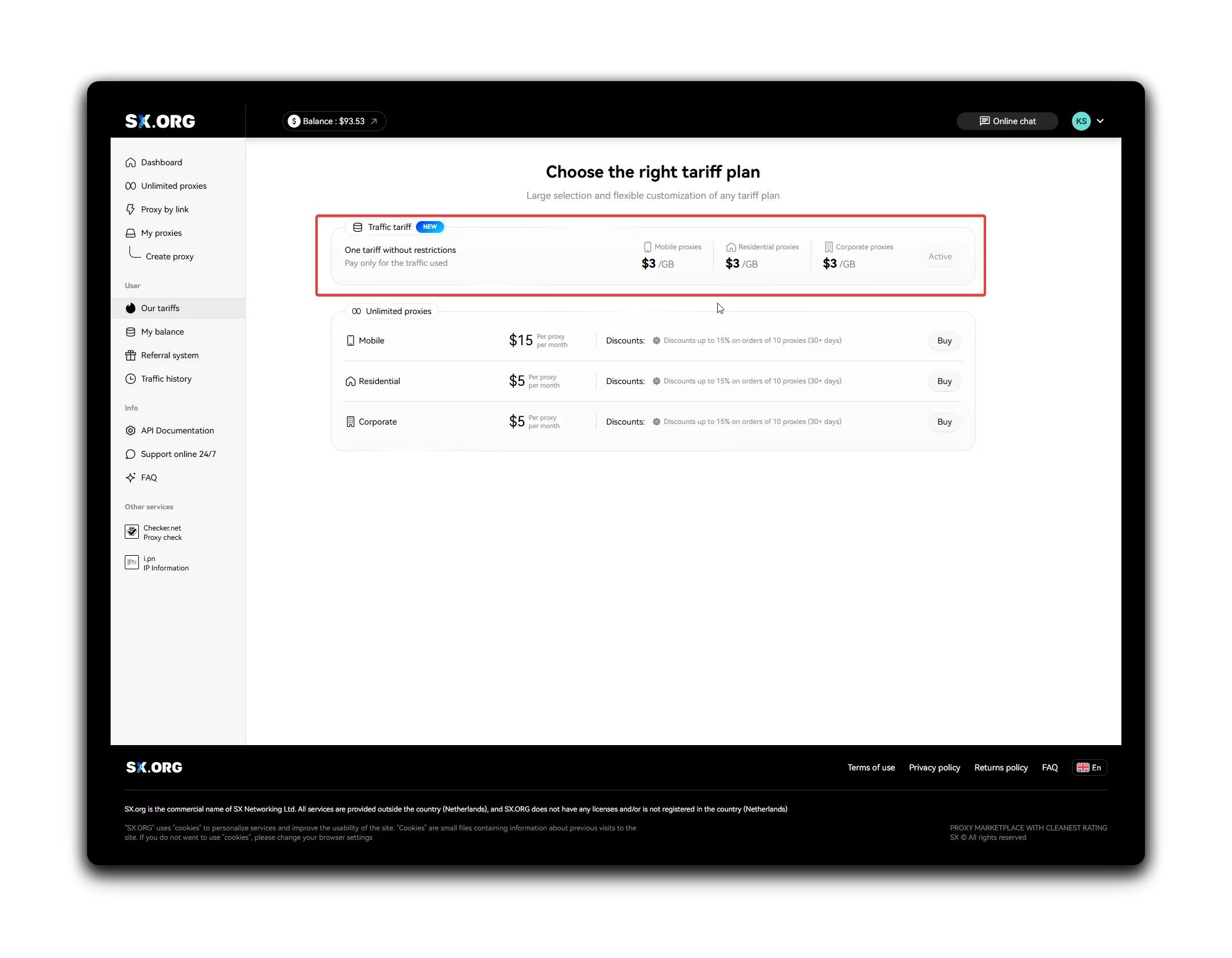
With SX.org: you can start with pay-as-you-go pricing, check traffic usage and how the source responds, then switch to an unlimited format if the task becomes regular.
When It Is Better Not to Use Shared Proxies
Messengers and SMM Software
For social networks and messengers, stability matters. The platform looks not only at the IP but also at the full setup: country, device, action frequency, login history and repeated behavior patterns.
Shared proxies can be used for tests, but it is better not to build the whole system for working accounts on a shared IP. This is especially important for account warm-up, mailings, inviting, multi-accounting or daily work.
Better choice: mobile or residential proxies.
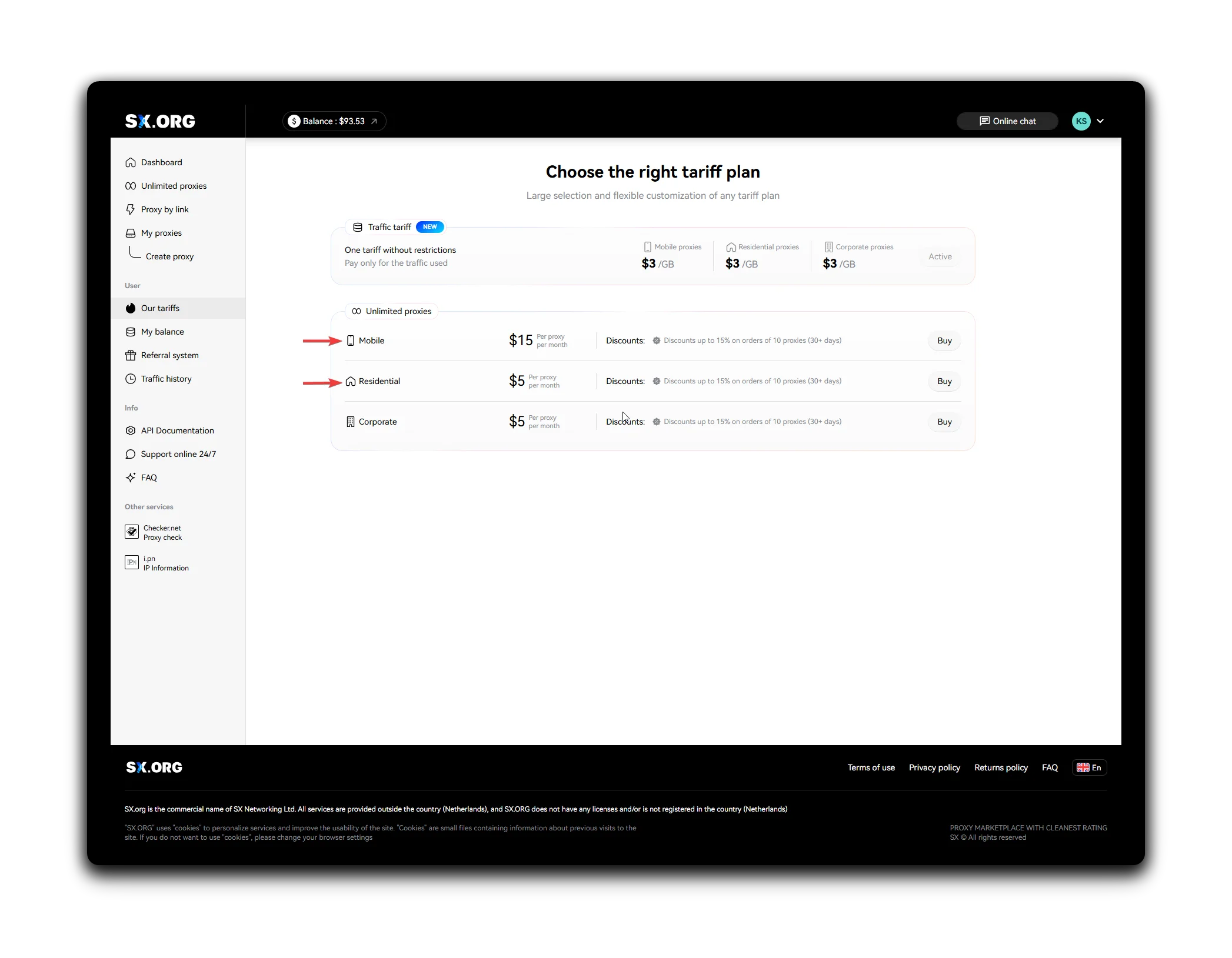
With SX.org: for messengers and SMM software, it is more logical to use mobile proxies if you need a mobile IP profile or residential proxies if a home ISP address and stable GEO are important.
Anti-Detect Browsers
An anti-detect browser helps separate profiles, but the proxy remains part of the digital footprint. If profiles are configured carefully but the IP is shared and used in different scenarios, the setup becomes weaker.
For working profiles, it is better to use a separate IP or a stable session. This is especially important if the profile is connected to an ad account, marketplace, payments or an account with history.
Better choice: dedicated residential, mobile or a separate corporate/server IP.
With SX.org: you can build a setup for a profile by choosing the right proxy type, GEO and payment format, then use the same IP context without constant switching.
Marketplaces and SEO Parsing
For marketplaces and SEO, region, data accuracy and result repeatability matter. Shared proxies may be suitable for lightweight collection but for complex sources, it is better to use a more suitable IP profile.
If you need to view search results from a specific country or city, check prices, product cards, stock levels, ads or competitors, residential proxies usually provide a more logical result.
Better choice: residential proxies for GEO and complex sources, corporate or server proxies for large-scale technical tasks.
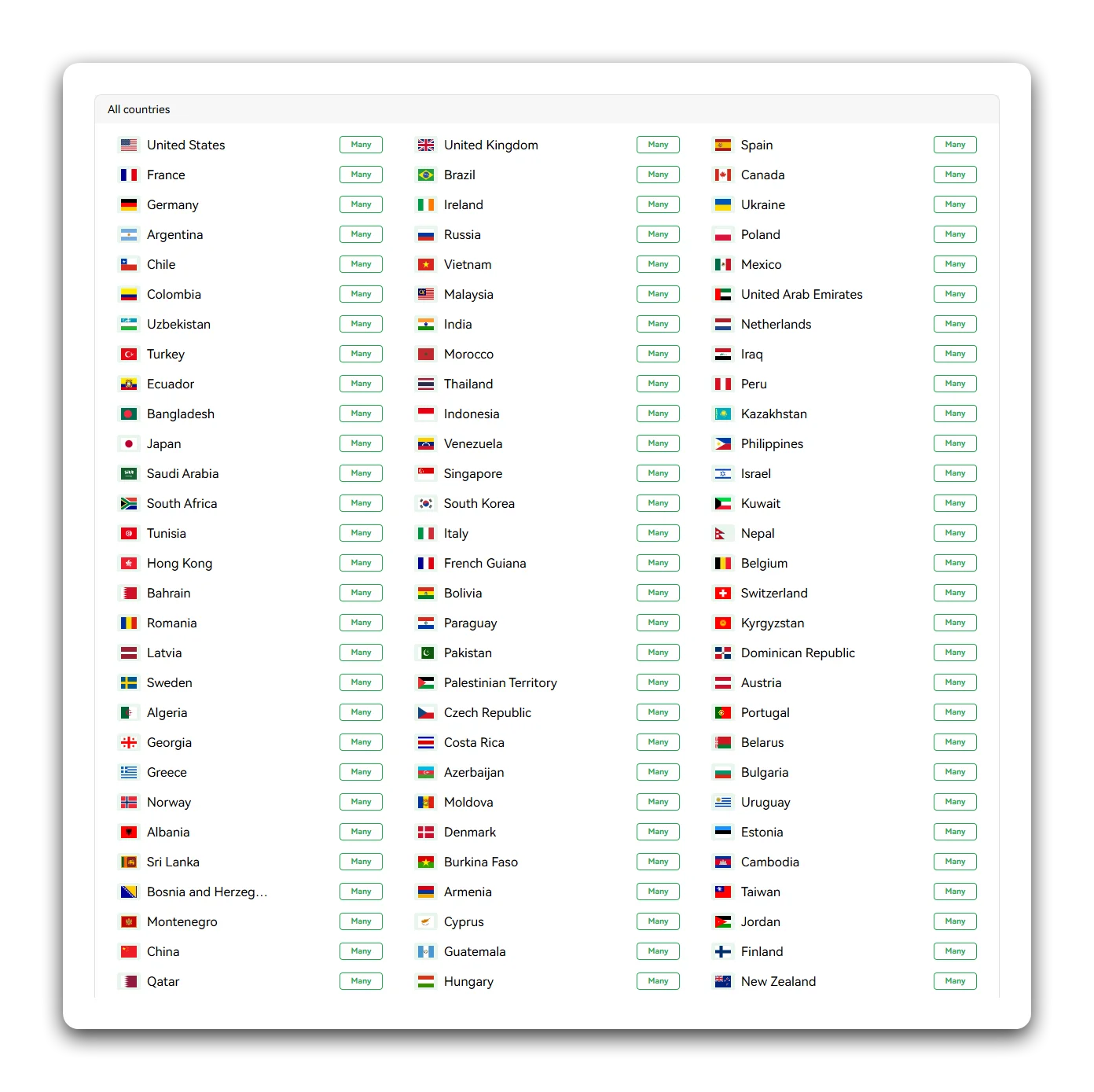
With SX.org: you can use country and city targeting to collect search results and data the way a user from the required region would see them. We have 235 countries and over 100,000 cities.
Account Registration and Warm-Up
Account registration and first actions depend heavily on the IP context. If an account is created through a shared address and then works in an unstable setup, the platform may treat it as risky.
For such tasks, the lowest price is less important than a clean history: one GEO, a stable session, a clear connection type and normal action frequency.
Better choice: mobile or dedicated residential proxies.
With SX.org: for accounts, you can choose mobile or residential proxies and avoid mixing different tasks on one IP profile.
Brief Conclusion
Shared proxies are suitable for simple tasks, tests and light automation. This is a normal starting format if you do not need an exclusive IP history and are not working with valuable accounts.
But for Telegram, VK, SMM software, anti-detect browsers, marketplaces, ad accounts and long sessions, it is better to choose proxies based on the task:
- mobile if a mobile IP profile matters;
- residential if you need a home IP and accurate GEO;
- corporate/server if speed, volume and stable technical work are important;
- Shared if the task is simple and not sensitive to IP history.
With SX.org, it is easier to start with a test, see how the source reacts to the selected proxy type and then scale the working setup without changing the entire infrastructure.